
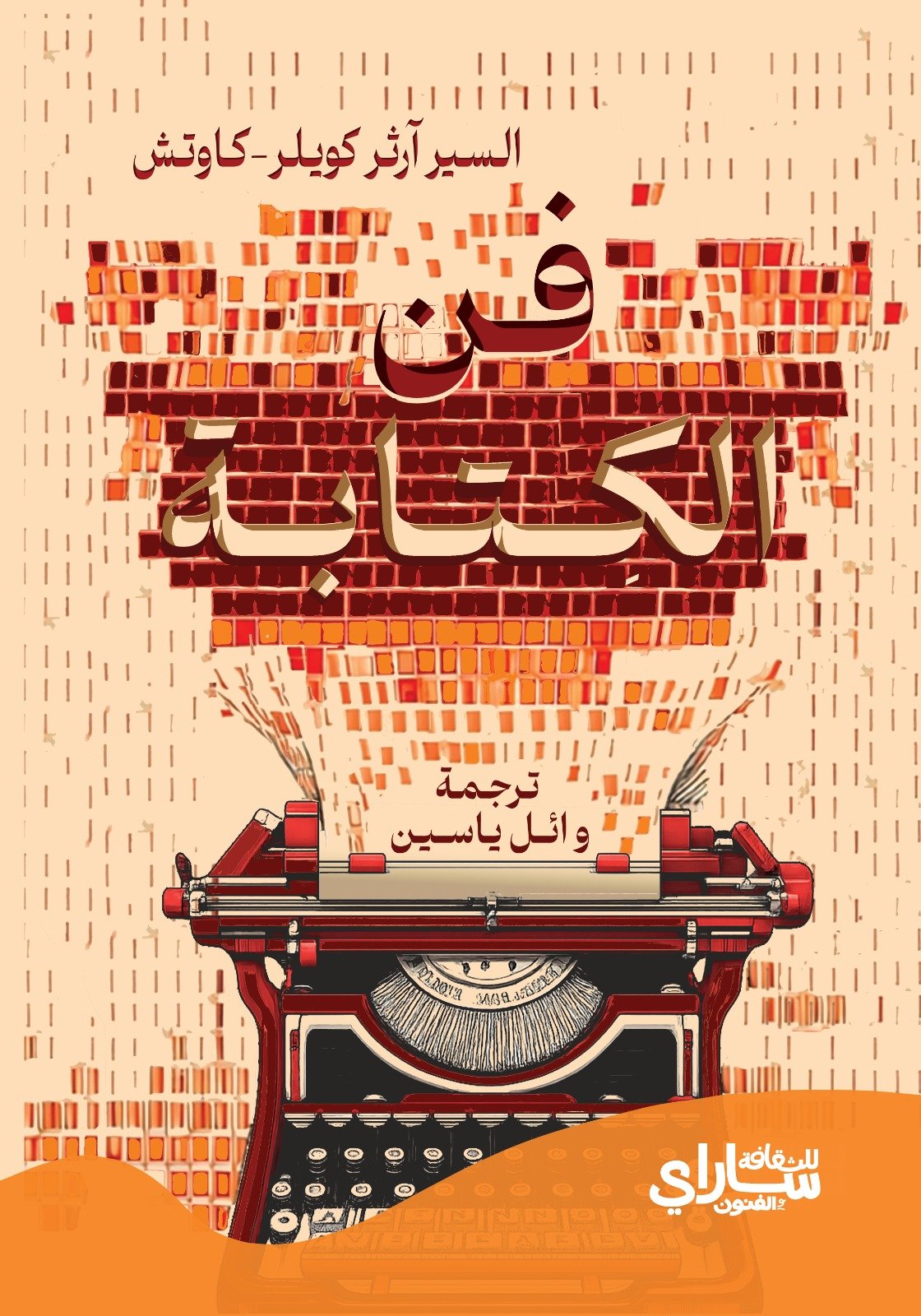
On The Art of Writing
Sir Arthur Quiller-Couch (1863–1944)
Sir Arthur Quiller-Couch was a distinguished English writer, critic, and academic, and one of the leading professors of English literature in the early twentieth century. Widely known by his famous nickname “Q,” he had a profound influence on the teaching of literature, working to simplify it and make it accessible to a broad readership beyond narrow academic circles.
Born in Cornwall, he studied at Oxford University and later served as Professor of English Literature at the University of Cambridge (1912–1944), where he delivered his celebrated lectures, later collected in influential books on writing and classical literature.
He is best known as the editor of The Oxford Book of English Verse, one of the most influential and widely read poetry anthologies of the twentieth century, which helped shape the literary taste of generations of readers.
He is also credited with the famous piece of advice on writing “Murder your darlings,” a call for stylistic discipline and the rejection of unnecessary ornamentation.
Alongside his work as a critic and editor, Quiller-Couch wrote novels, short stories, and essays, and firmly believed that literature is a living human act—meant to be read as an experience of pleasure and understanding, rather than as dry academic material.
**************************************
On the Art of Writing is not a book about how to write, but about why one writes—when one fails, and how one survives failure.
In these brilliant classical lectures, the author leads readers to the heart of the literary experience, where rules do not save the writer, classifications fall short, and literature emerges as an act of intellectual courage before it becomes a matter of linguistic skill.
The book explores fundamental distinctions between poetry and prose, the development of literary language, the influence of philosophical thought on English literature, and the role of individual genius in transcending convention—from Chaucer to Shakespeare, and from folk song to the sonnet.
This book is addressed to writers, translators, and critics, and to everyone who seeks to understand literature not as a craft alone, but as a living art that ventures boldly into language and thought alike.